
Preprint: The summary presented here is based on a field study conducted in summer 2025 as part of the author's study project in the master's program in Waste Management and Contaminated Sites at TU Dresden. A comprehensive presentation of the study, with detailed analyses and extended recommendations for action, will appear in a subsequent monograph (Hussam Alddin Alchaar, expected 2026).
Abstract
The metropolitan region of Damascus is facing a desolate ecological state. While the waste management infrastructure has been weakened by years of conflict, sanctions, and economic erosion, the risks to the environmental goods of soil, water, and air continue to rise. This paper analyses the current state of waste management in Greater Damascus based on an empirical study conducted in summer 2025. It demonstrates how the principles of the circular economy can not only minimize ecological damage but also serve as a driver for socio-economic reconstruction. Central to the study is a pioneering waste sorting analysis that provides orienting data on waste composition in the post-conflict phase and identifies concrete starting points for resource recovery and composting.
Keywords: Circular economy, waste management, post-conflict, Syria, resilience, resource recovery
1 Introduction: Problem Statement and Theoretical Framework
1.1 The Threat of Poor Waste Management to Environmental Resources and Protected Goods
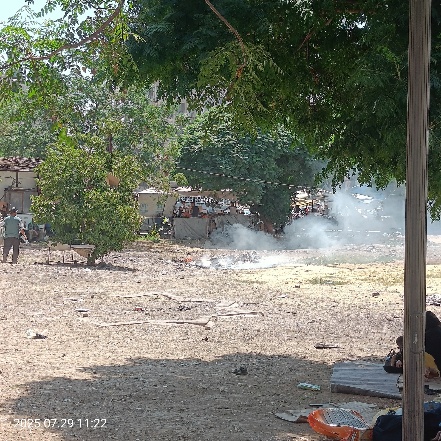
Inadequate waste management significantly endangers the protected goods of human health, biodiversity, soil, and water. Illegal dumping and unsecured landfills lead to groundwater contamination through heavy metals and persistent pollutants (Han et al. 2016). Open burning releases highly toxic dioxins and particulate matter, while landfills emit methane; a greenhouse gas with approximately 28 times the global warming potential of CO₂ (IPCC 2021). Waste accumulations also serve as breeding grounds for disease vectors and promote infectious diseases (WHO 1997; Babatunde et al. 2025).
1.2 Specifics in Crisis Regions
In post-conflict regions such as Yemen or Syria, the problems of waste management are exacerbated by profound systemic vulnerabilities.
Studies show that infrastructural decay due to the impacts of war leads to a collapse of logistics (DIIS 2025; PAX 2025). The economy of scarcity causes informal recycling structures to dominate, operating in disregard of occupational safety standards (Wilson et al. 2012; Gutberlet 2012). The hazardous mixture of municipal solid waste with remnants of war poses a particular challenge. In Ukraine, for example, asbestos-containing rubble from destroyed buildings must be treated separately, as it cannot be recycled (UNDP Ukraine 2024). In the Gaza Strip, the war has led to a complete collapse of the waste management system, with over 140 temporary waste collection sites and significant health risks for the population (UNDP 2024). The removal of approximately 370,000 tons of war debris has consequently become a humanitarian emergency operation, coordinated by UNDP (UNIFEED 2025).
1.3 Potentials of the Circular Economy
The circular economy overcomes the linear "take-make-dispose" model through closed material loops (Geissdoerfer et al. 2017; Daly & Farley 2011). It conserves primary raw materials (European Commission 2008, Art. 4) and can reduce import dependencies (Livingstone et al. 2022). Organic waste offers potential for composting and soil improvement (FAO & ITPS 2015). Crucially important is the integration of informal waste collectors as essential actors in resource management (Moalem & Ghosh 2024; Wilson et al. 2012). Their formalization through cooperative structures and Extended Producer Responsibility (EPR) can improve working conditions and increase the efficiency of the entire value chain (Gandhar 2025).
2 Field Study: Current State Assessment in Greater Damascus
The data were collected by the author during a research stay in Syria in the summer of 2025. Due to the incomplete official data situation, an exploratory approach was chosen, combining physical site inspections, a sorting analysis, and qualitative interviews.
2.1 Methodology
Data were collected by the author during a research stay in Syria in the summer of 2025. The study covered central Damascus and selected areas of the Rif Dimashq governorate. In cooperation with the provincial administration, facilities along the waste management chain were visited, including inner-city collection points, intermediate landfills (Babbila, Jaramana), and the Al-Ghazlaniyya landfill with its mechanical-biological treatment plant.
Given the limited data availability, an exploratory multi-method approach was applied, combining sample-based waste sorting, guided interviews with administrative and operational staff, and a visual technical assessment of the infrastructure. The research faced typical post-conflict constraints, including incomplete documentation, security restrictions, communication barriers, and its snapshot character. All interviews were anonymized at the request of the respondents.
2.3 Results of the Current State Assessment
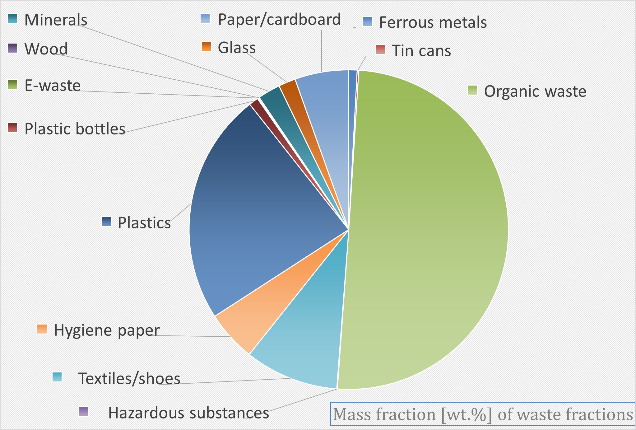
The sorting analysis revealed an organic content of approximately 50 %, followed by plastics (approx. 25 %), textiles (approx. 10 %), paper/cardboard (approx. 5 %), hygiene products (approx. 5 %), and the remaining fractions (approx. 5 %). On-site observations showed intensive informal recycling activities: metals and high-quality plastics are already being separated at the collection points, albeit under precarious conditions without occupational safety measures.
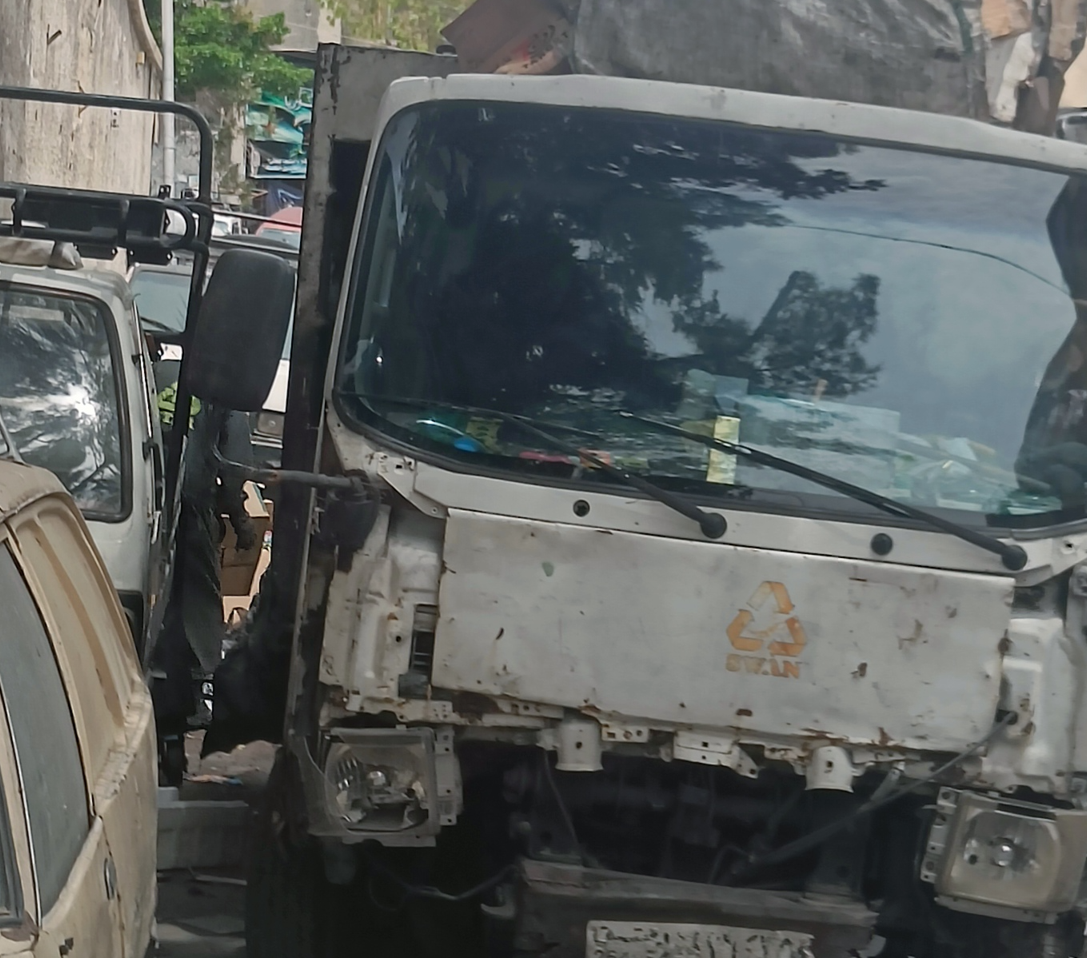
The central vehicle fleet is severely reduced due to years of spare parts shortages. The mechanical-biological waste treatment plant in al-Ghazlaniyya was vandalized and looted; large quantities of waste are landfilled untreated, resulting in emissions of landfill gas and leachate.
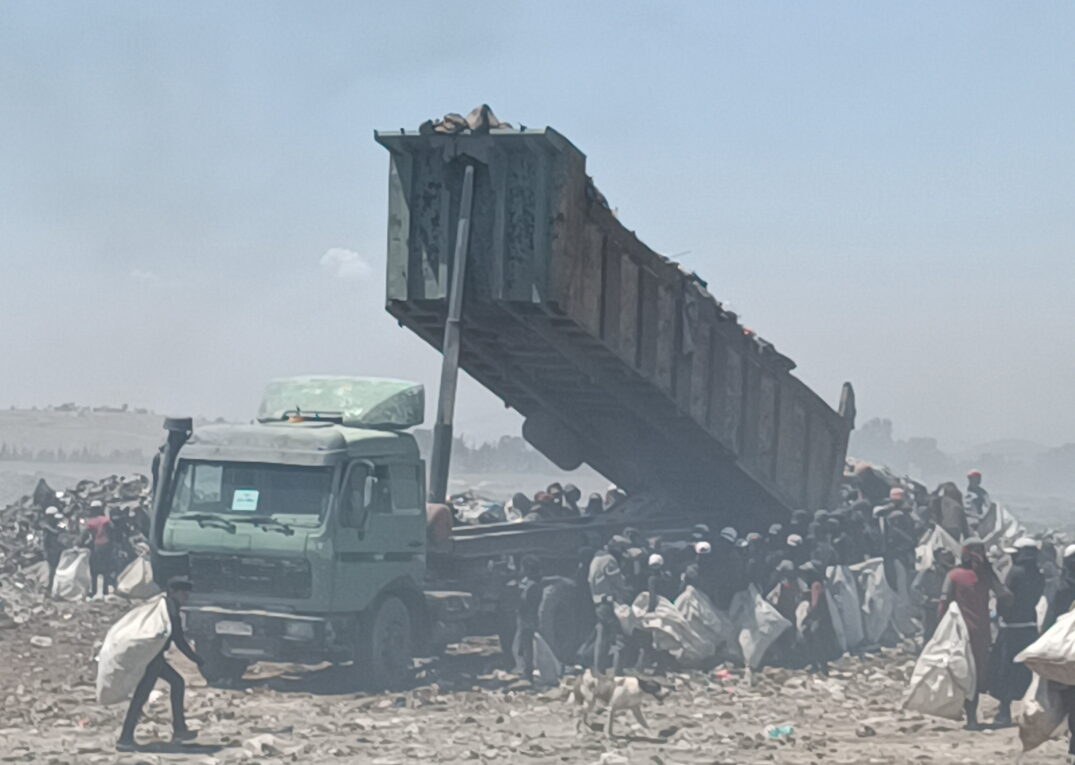
The interviews confirmed the dominance of informal structures. Economic erosion is forcing more people to resort to waste picking as a survival strategy. There is a lack of regulatory control and funding; environmental concerns are subordinate to issues of supply policy.
3 Discussion
3.1 Systemic Vulnerabilities in Greater Damascus
The research findings confirm the three characteristic dimensions of systemic vulnerability.
Firstly, infrastructural decay is evident: the logistical chain is fragmented due to the impacts of war and ongoing spare parts shortages, leading to a progressive reduction in operational capacity (cf. the analysis of Yemen in DIIS 2025; PAX 2025).
Secondly, an economy of scarcity manifests itself: the dominance of informal recycling structures follows a dynamic typical of crisis regions, whereby economic erosion forces survival strategies in which waste is perceived as a last resource (DIIS 2025). Informal collectors provide essential resource recovery, but at the expense of their health and without occupational safety; a phenomenon extensively documented in comparative studies on the Global South (Wilson et al. 2012; Moalem & Ghosh 2024).
Thirdly, there is the risk of hazardous waste mixing: the uncontrolled mixture of municipal solid waste with medical waste and potentially asbestos containing rubble poses a significant, yet unresolved risk. The Gaza Strip exemplarily demonstrates how war destruction and collapsed waste systems can lead to such a hazardous situation (UNDP 2024; UNIFEED 2025). Although no specific documentation exists for Syria in this regard, the structural comparability of the crisis contexts suggests an analogous risk.
3.2 Starting Points for a Circular Economy
Despite these multiple crisis dynamics, the post-conflict situation opens specific windows for transformation. The high organic content of approximately 50 % offers considerable potential for composting. For Damascus, this means that decentralized composting could reduce landfill volumes and methane emissions while simultaneously providing urgently needed soil conditioners for urban agriculture (FAO & ITPS 2015).
The plastic, metal, and paper fractions (together approximately 30 %) can be channelled into material recovery through source separated collection. For a scarcity economy like Syria, this implies not only climate relief but also a reduction in import dependencies (Livingstone et al. 2022).
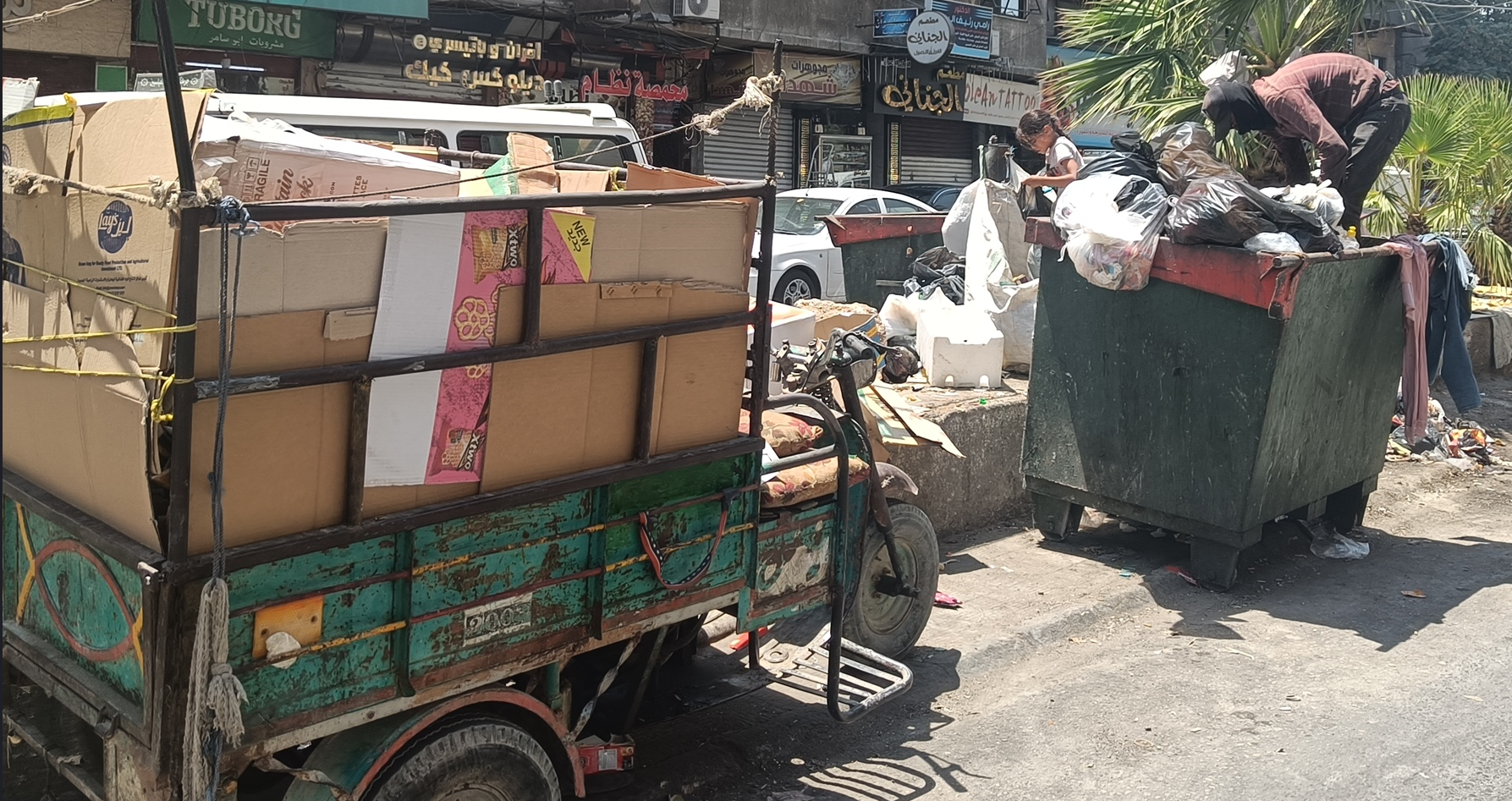
The informal collectors, who already perform valuable recycling work today, must be recognized as an integral part of the resource economy (Wilson et al. 2012; Moalem & Ghosh 2024). Their gradual formalization through cooperative organizational forms, protective equipment, and social security can increase the efficiency of the entire value chain. Instruments such as Extended Producer Responsibility (EPR) could generate financial flows that support this integration (Gandhar 2025).
4 Conclusion: Circular Economy as a Resilience Strategy for Syria
The study shows that waste management in the Greater Damascus area faces enormous challenges but also offers considerable potential for a transformation towards a circular economy.
The central finding is: A circular economy is not only possible after overcoming the crisis, but also a tool to overcome it. It addresses multiple dimensions of reconstruction:
- Ecologically, through the reduction of landfill volumes and avoidance of methane emissions (IPCC 2019, Vol. 5, Chap. 3), and the regeneration of damaged soils (FAO & ITPS 2015)
- Economically, through the substitution of import dependent primary raw materials, the establishment of local secondary raw material markets (Livingstone et al. 2022), and the reduction of reconstruction costs
- Socially, through the recognition, formalization, and enhancement of informal waste collectors, as well as the creation of local employment opportunities (Wilson et al. 2012; Moalem & Ghosh 2024)
In this way, the circular economy makes a substantial contribution to achieving international sustainability goals (UNDESA 2015) and to strengthening the resilience of urban systems in post-conflict contexts.
The international community is called upon to support this process through long term partnerships, technology transfer, and capacity building. Concrete next steps could include pilot projects for decentralized composting, incentive systems for separate collection, formalization of informal collectors, and the development of recycling capacities. The present study provides an empirical orientation basis for this.
Tadweer-Tech is a newly established Syrian youth initiative, launched in January 2026, dedicated to addressing the growing waste crisis and reducing its impact on the Syrian environment. The initiative strives to transform waste into valuable, recyclable resources—serving both society and the environment while promoting sustainable practices. Tadweer-Tech operates through three main pillars: conducting training and awareness workshops to foster environmental responsibility, networking with decision-makers to advocate for stronger environmental legislation, and implementing practical solutions in waste sorting, treatment, and recycling. Through these efforts, waste could be converted into raw materials and renewable energy, potentially contributing to a more sustainable and circular economy in Syria.
References
Han, Z., Ma, H., Shi, G., He, L., Wei, L. & Shi, Q. 2016. A review of groundwater contamination near municipal solid waste landfill sites in China. Science of The Total Environment, 569–570, S. 1255–1264. DOI: 10.1016/j.scitotenv.2016.06.201.
IPCC. 2021. Climate Change 2021: The Physical Science Basis. Contribution of Working Group I to the Sixth Assessment Report of the Intergovernmental Panel on Climate Change. Cambridge: Cambridge University Press. Kapitel 7, Table 7.15.
WHO (World Health Organization). 1997. Health risks of solid waste. In: Health and Environment in Sustainable Development: Five Years after the Earth Summit. Genf: WHO, S. 4.3.2, Table 4.
Babatunde, O. S., Adewale, B., Olasoji, S. O. et al. 2025. Survey of Refuse Disposal Practices, Geohelminth Contamination, and Vector Abundance at Dumpsites in Akure Metropolis, Nigeria. Journal of Parasitology Research, 2025: 8298486. DOI: 10.1155/japr/8298486.
DIIS (Danish Institute for International Studies). 2025. The slow violence of waste in Yemen: Addressing long-term consequences of solar transition. DIIS Policy Brief. Kopenhagen.
PAX & European Institute of Peace. 2025. Dealing with Yemen's solid waste crisis to support peace and recovery. Utrecht/Brüssel.
Gutberlet, J. 2012. Informal and Cooperative Recycling as a Poverty Eradication Strategy. Geography Compass, 6(1), S. 19–34. DOI: 10.1111/j.1749-8198.2011.00468.x.
Wilson, D. C., Rodic, L., Scheinberg, A., Velis, C. A. & Alabaster, G. 2012. Comparative analysis of solid waste management in 20 cities. Waste Management & Research, 30(3), S. 237–254. DOI: 10.1177/0734242X12437569.
UNDP. 2024a. Rapid Assessment- UNDP/PAPP's Emergency Response to Solid Waste Management. Juli 2024. Verfügbar unter: https://www.undp.org/papp/publications/rapid-assessment-undp/papps-emergency-response-solid-waste-management [Zugriff am 14. Februar 2026].
UNDP. 2024b. Situational Report- UNDP/PAPP's Emergency Response to Solid Waste Management. Oktober 2024. Verfügbar unter: https://www.undp.org/papp/publications/situational-report-undp/papps-emergency-response-solid-waste-management [Zugriff am 14. Februar 2026].
UNDP. 2025. UNDP/PAPP's Emergency Response to Solid Waste Management. Dezember 2025. Verfügbar unter: https://www.undp.org/papp/publications/undp/papps-emergency-response-solid-waste-management-1 [Zugriff am 14. Februar 2026].
UNDP Ukraine. 2024. UNDP supports innovative solution to 'war waste' in Ukraine. UN News, Juni 2024. Verfügbar unter: https://news.un.org/en/story/2024/06/1150906 [Zugriff am 14. Februar 2026].
UNIFEED. 2025. GAZA / UNDP WASTE MANAGEMENT. 11. Februar 2026. Verfügbar unter: https://media.un.org/unifeed/en/asset/d353/d3534442 [Zugriff am 14. Februar 2026].
Daly, H. E. & Farley, J. 2011. Ecological Economics: Principles and Applications. 2. Aufl. Washington, D.C.: Island Press.
Europäische Kommission. 2008. Richtlinie 2008/98/EG des Europäischen Parlaments und des Rates vom 19. November 2008 über Abfälle (Abfallrahmenrichtlinie). ABl. L 312 vom 22.11.2008.
FAO & ITPS (Food and Agriculture Organization & Intergovernmental Technical Panel on Soils). 2015. Status of the World's Soil Resources: Main Report. Rom: FAO.
Gandhar. 2025. Circularity has a hidden price: Who pays for fair and compliant recycling? Down To Earth, 23. Oktober 2025.
Geissdoerfer, M., Savaget, P., Bocken, N. M. P. & Hultink, E. J. 2017. The Circular Economy – A new sustainability paradigm? Journal of Cleaner Production, 143, S. 757–768.
Livingstone, L., Börkey, P., Dellink, R. & Laubinger, F. 2022. Synergies and trade-offs in the transition to a resource-efficient and circular economy. OECD Environment Policy Papers, No. 34. Paris: OECD Publishing. DOI: 10.1787/e8bb5c6e-en.
Moalem, R. M. & Ghosh, S. K. 2024. Value Creation from Waste: Roles and interface between the Informal and Formal waste Sectors in India and Denmark in a just circular transition. Journal of Solid Waste Technology and Management, 50(4), S. 711–724.
IPCC. 2019. 2019 Refinement to the 2006 IPCC Guidelines for National Greenhouse Gas Inventories. Vol. 5: Waste. Hayama: IGES.
UNDESA (United Nations Department of Economic and Social Affairs). 2015. Transforming our world: the 2030 Agenda for Sustainable Development. A/RES/70/1. New York: United Nations.